CAD/CAE System Integration Technology for Automotive Stamping Die Design
2022-05-21
The core technology of automobile mold design and manufacture is stamping technology. The level of stamping technology determines the level of mold design and manufacture. With the continuous development of the domestic auto industry, China's auto mold industry is also making continuous progress, and the competitive advantage of foreign auto mold factories will be gradually weakened, and will eventually become more and more recognized with domestic molds. Only continuous transformation and upgrading of enterprises is the only way for the mold industry to become bigger and stronger. Let's learn about the CAD/CAE system integration technology of automotive stamping die design and the requirements for machine tools and cutting tools.
CAD/CAE System Integration Technology for Automobile Stamping Die Design
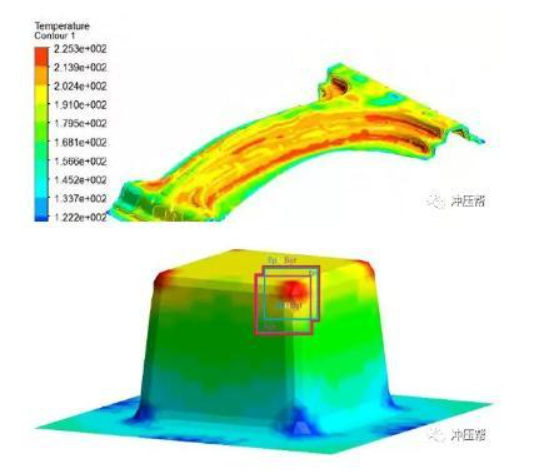
The international application of CAE technology represented by finite element simulation analysis software has a history of nearly 30 years. In the past 10 years, great progress has been made in the application of plastic deformation theory in sheet metal forming technology, which makes the application of CAE technology in automobile mold manufacturing mature.At present, many domestic auto mold companies have applied CAE software, and most of them are Autoform software. The application of CAE has significantly shortened the mold debugging cycle. Formability analysis can be done in traditional CAE software, and requires professionals to do a lot of pre-processing. If the analysis results are not satisfactory, it is necessary to start all over again. Because the traditional CAE software is only a means of verification, it is mainly used for the comparison of the scheme, and cannot be used for the assistance of the process, which causes the CAE technology to be out of the production process for a long time.
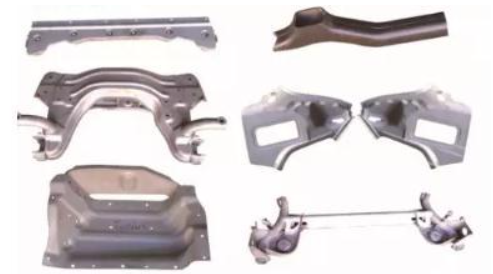
Now CAE software has been developed to not only do simple forming analysis, but also participate in the whole process of stamping process, that is, computer-aided stamping process. At present, CAE software has become an indispensable part of the mold design process. It is highly oriented to the end user, and the operator can use it conveniently without a deep knowledge of CAE and without too much actual debugging experience. In the past, it took at least 1-2 years for a beginner to reach the same level. Compared with 10 years ago, the general CAD/CAE system on the market has changed a lot. It used to be a relatively general system. At present, a lot of adaptive development or transformation has been made for the actual mold manufacturing, which is undoubtedly huge. progress. Some typical CAD/CAE systems on the market are very powerful, but in practical applications, due to changes in the environment, it is always difficult to achieve the expected results, or there are some unsatisfactory places. In the long run, from the perspective of cost reduction and service, it would be better to have a powerful CAD/CAM system. In the long run, the integration of CAD/CAE will become a demand or trend. In fact, there are many such attempts, but the application effect is not very ideal.
It is necessary for CAD/CAE system developers to make some special and meticulous combing, analysis and characterization of the design ideas of the cover mold, and then find a combination point from the perspective of the software system. The integration between software systems is always moving forward, and there is no problem with the physical network processing. Now some mold factories have realized the CAD/CAM integration under the PDM environment. From the point of view of the relationship between the system development and the industrial application of the mold factory, there is no more mature experience for reference if there is no industrial application. The mold factory needs investment to apply, and the investment needs income. With the continuous emergence of new processes and new products, stamping dies have developed from conventional single-pair progressive dies to multi-functional combined dies, production line matching combined die tooling, extra-large progressive dies and stamping and forming dies for fine parts.
Requirements for machine tools and cutter tools in automobile stamping die manufacturing
Advanced processing technology and equipment are an important basis for improving productivity and ensuring product quality. It is not uncommon to see CNC machine tools equipped with double worktables, automatic tool changing devices, photoelectric control systems for automatic processing, and online workpiece measurement systems in advanced automobile mold enterprises. CNC machining has developed from simple profile machining to comprehensive machining of profile and structural surfaces, from medium and low-speed machining to high-speed machining, and machining automation technology has developed very rapidly. The quality and performance of automotive mold materials are important factors that affect mold quality, life and cost. In recent years, in addition to the continuous introduction of a variety of high toughness and high wear resistance cold work die steels, flame quenched cold work die steels, and powder metallurgy cold work die steels, the selection of cast iron materials for large and medium-sized stamping dies abroad is a worthy cause. Development trends to watch. Ductile iron has good toughness and wear resistance, and its welding performance, machinability, and surface quenching performance are also good, and the cost is lower than that of alloy cast iron, so it is widely used in stamping dies.
If you want to know more about the relevant trends of Macchio plastic injection molding processing, you can log in to WDC Mold official website. There are more new developments about WDC Mold. We look forward to your visit! https://www.wdcmold.com/
Recent Posts